
- Starting costs
- Make a practice pack with your own text and shapes using a free design tool. A laptop, internet and time are still required.
- Ongoing costs
- Stock images, brand fonts and premium design assets may cost money. Obtain permission and agree who covers licenses; a free-tool route avoids premium assets.
- Device and work style
- laptop · Off camera · Client service
- Bring these basics
- Basic layout and clear short-form writing. Ability to verify prices, dates and claims with the business. Permission to use supplied photos, logos and other brand material.
Finished example
This original teaching sample is for Juniper Bread, a fictional bakery. It is not a real client, a live promotion, or proof of earnings.
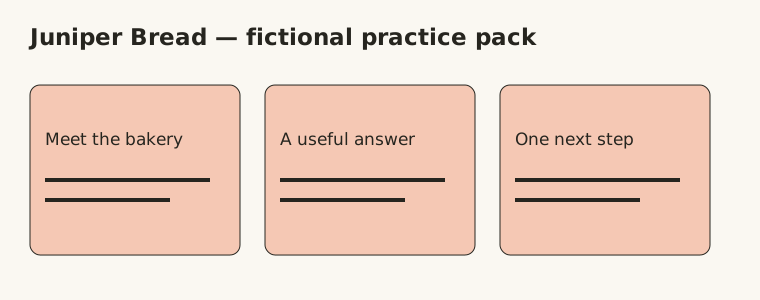
The first caption could read: “Practice example: meet Juniper Bread, a fictional neighborhood bakery. This sample introduces the style of a small business without promising an outcome.” A real caption would use facts supplied and approved by the actual business.
| File | Purpose | Approval question |
|---|---|---|
| 01-introduction.png | Introduce the business | Is the description accurate? |
| 02-common-question.png | Explain one buying detail | Are the answer and any dates current? |
| 03-next-step.png | Make the next action clear | Does the contact route work? |
Fit and tradeoffs
Two delivery routes. On the DIY route you write, design and check the pack yourself, so the fit notes below apply to you. A supported route, where EYF makes an approved deliverable while you handle the buyer, their approved photos and facts, and their sign-off, wouldn’t require design skill. EYF fulfillment isn’t accepting requests or orders, and a pack service is on hold, so this method is DIY for now.
This suits someone who likes organizing a vague idea into clear words and a simple layout. You can work off camera and avoid account passwords by delivering files for the business to post. Careful fact-checking matters more than decorating every graphic.
Skip it if you cannot reliably check details or dislike asking for missing information. A buyer may provide poor photos, change an offer after approval, or request many revisions. Writing captions is not the same as running a social-media strategy. Make that boundary visible in the offer.
How it works
These are the DIY steps for making the pack yourself. If an approved EYF service ever covered this work, your part would be agreeing the scope, collecting approved photos, facts and permissions, and getting the named approver’s sign-off. Pack fulfillment is on hold, so follow these steps.
- Pick a narrow deliverable. Start with a three-post pack rather than a monthly account-management service. Set the formats, caption count, deadline and included revision round.
- Collect an approved brief. Ask what the business wants someone to understand or do. Confirm brand assets, product details, opening times and prohibited claims.
- Plan the messages. Give every post one job. Share the text outline before spending time polishing graphics.
- Build a consistent pack. Use a small palette, repeatable spacing and readable type. Avoid premium assets unless their cost and use rights are agreed.
- Find a buyer with the right problem. A business with stale posts may simply not want social media. Ask whether preparation or design is actually slowing them down. Offer your permissioned sample without claiming guaranteed reach.
- Get approval and hand off. Deliver numbered files, editable access if agreed, captions and an asset-rights note. Let the buyer approve factual claims before posting.
Get Customers
A good sample doesn’t guarantee a buyer; finding one is a separate, uncertain step. The routes and messages below are hypothetical EYF examples to test and adapt, not proven scripts or evidence of demand. Replace every bracket with a true detail, or don’t send the message.
Choose your delivery route first
DIY: you make the pack. Your sample has to show you can. Use your three-post practice pack from the starter task, labeled as fictional. The Juniper Bread illustration above explains the idea; your own exported files are what a buyer should see. Check that each graphic is readable on a phone, every caption matches its image, the spelling is correct and you can open both the exported PNGs and the editable masters (the design files you can still change). Then practice one correction: change a fictional detail, such as an opening time, and update the graphic, caption and handoff sheet without missing a copy. If the pack still looks rough or the correction slips through, keep practicing or try another method. Practice work is never a client result or testimonial.
EYF fulfillment: on hold for packs. In a supported route, EYF would make an approved deliverable while you found the client, collected their approved photos and facts, explained the scope and got their sign-off, so you wouldn’t need design skill. EYF fulfillment isn’t accepting requests or orders, and a pack service is specifically on hold: EYF hasn’t shown that a generic set of three graphics and captions gives owners useful paid value beyond ordinary AI-generated posts. Don’t offer EYF delivery for packs.
The hold covers only EYF’s generic paid pack, not an offer you make and deliver yourself. Still, an owner can draft generic posts themselves. What they might pay for is a pack tied to a real update, built from photos and facts they’ve approved, and checked well enough to post without rewriting.
Shape the offer in the buyer’s words
Describe what the owner receives, not what you do in a design tool:
“Three matching posts with captions for your [real update], made from photos and details you approve. You post them yourself.”
Include three graphics in agreed dimensions, three captions, exported files, editable masters if agreed, a handoff sheet and one revision round. Exclude photography, scheduling, posting, running the account, replying to comments, ads and any promise of sales or followers. Every price, date and claim comes from the owner; never fill a gap with an invented one.
Delivery for this offer: DIY only, using your own checked sample. EYF pack fulfillment is on hold, so it isn’t an option to include.
Treat the offer as a question. You don’t know whether an owner needs it until they tell you how they prepare posts now.
Three routes to a first buyer
A local group that allows offers. Use a Facebook group or Nextdoor only for an area where you actually live or work. Read each group’s current rules first; don’t assume offers are allowed. If they aren’t, don’t post one: ask whoever runs the group, or use another route. Where an offer is allowed:
“For [actual area] owners preparing for [upcoming event], I can make three matching posts and captions from your approved photos and details. This is my practice sample, made for a fictional bakery. Would that be useful?”
A warm introduction. Ask someone who knows you whether they know an owner with an upcoming update. Give them the three-post scope and your labeled sample to forward, and let them make the introduction. Don’t ask for their contact list.
“Do you know an owner who needs posts for an upcoming update? Would you be comfortable forwarding my practice sample and three-post scope?”
A personal message based on one true observation. Choose one business with a visible reason to ask, such as an event it has announced, and write to that person alone. Never send the same message to a copied or scraped list.
“You mentioned [real upcoming event]. How do you usually prepare posts for it? If useful, I can show you a small practice pack.”
If your sample isn’t ready, send only the question and listen. Learning how owners handle posts is useful research, provided you don’t offer work you can’t yet deliver. Don’t put a business’s photos or logo into a sample until it has given permission.
Handling replies
- Interested: Ask before quoting. “What should the posts communicate, which photos and details can I use, who approves them and when do you need them?” The content brief guide helps you record the answers.
- Asks the price: Explain the scope first. “The quote covers three graphics and captions in [agreed size], one revision round and the agreed graphics, captions and handoff files, delivered [timing] after I have your approved photos and details. It doesn’t include posting or ads.” Base the fee on your own time estimate, including messages and revisions, not on a rate you’ve seen online. Agree a price or deadline only when you’re sure you can deliver it yourself.
- Wants sales or followers promised: Explain what you check: accurate facts, readable files and a consistent look. Say plainly that you can’t guarantee how the posts perform, and decline if they need that guarantee.
- Already has someone or isn’t interested: Thank them and stop. Don’t criticize their current arrangement.
- No usable photos or facts, or wants something outside the offer: Explain the dependency. You could narrow to text-led graphics from approved details, or decline. Photography, ads and account management are separate work, not extras to absorb.
- Not now: “Would a check-in before [their next event] be welcome?” Return only if they say yes.
If there’s no reply and a check-in would be welcome on that channel, send one: “Is a three-post pack for [event] useful right now? If not, no need to reply.” If that goes unanswered, stop contacting that person.
If nobody replies
Silence isn’t a reason to send more. Check the need: did the owner have a real upcoming update, or did you guess? Check the sample: is it clean, labeled and close to what they’d need? Check the offer: could someone tell in one read what they’d receive and supply? Check the channel: do these owners discuss this kind of task there?
Change one meaningful thing, such as the type of business, the scope wording, the sample or the route, and try again when you’re ready. There’s no message quota or deadline.
Agree a small paid pilot
Before starting, confirm in writing (the scoping guide goes into more detail):
- what the posts are for
- the approved photos, logo and facts, with permission to use them
- the output files: three graphics in [agreed dimensions], three captions, editable masters if agreed and a handoff sheet
- excluded work, such as posting, photography and ads
- the fee, and how and when you’ll be paid
- a deadline counted from when you receive usable inputs
- the named person who approves the pack
- one included revision round, with feedback collected into one list, and how extra changes would be priced separately
- that the job is finished when that person confirms final acceptance
You and the buyer arrange payment directly. EYF doesn’t invoice or collect it, and it’s separate from anything you might ever pay EYF. Your fee has to cover your time finding the buyer, messaging, designing and revising, plus any payment or tool fees, so no price guarantees a profit.
Deliver, revise and get acceptance
Send the approver the actual agreed files: the exported graphics, the three captions, any agreed editable masters and the handoff sheet with filenames, captions and posting order. Ask for all their changes in one list, make that included revision, then rerun your checks: correct facts, phone readability, captions matching graphics and every file opening.
Then ask the named approver to accept the final version explicitly: “Do these three posts, captions and files match what we agreed? If so, please confirm they’re accepted.” Acceptance and payment are separate steps; confirm both.
After acceptance and payment
Once the pack is accepted and paid, ask whether you may show it or describe the project accurately. If you share it in a group, follow its rules. Describe what you delivered, not sales you can’t verify.
If the owner is happy, you can also ask for an introduction. This is optional:
“If you know another owner with an upcoming update, would you be comfortable forwarding my scope, and this pack if you’re happy to share it? Feel free to say no.”
A genuinely new event, product or update could become another pack from fresh approved details; that’s a new job, not an automatic monthly arrangement. For your second client, repeat a route that worked or try another suitable channel.
Your next step
Open your practice pack and run the phone and correction checks above. Then note one real owner or contact connected to an upcoming update, with the true fact that links them to it, and draft one opening for the route that fits. For a group, reread its rules before posting; for an introduction, let your contact make it.
What buyers need
A plausible buyer needs consistent, accurate material that they can use without rewriting everything. Useful questions are: “Which questions do customers repeat?”, “Which photos can we use?” and “Who approves a price or promotion?” Their answers are stronger evidence for your offer than a generic claim that every business needs posts.
Upwork lists social-media-related skills in its marketplace research. That signal covers broader work than a small content pack and does not validate this particular offer. Canva’s license terms matter when its content appears in work for a client; the safest practice sample uses your own text and simple original shapes.
For a first conversation, define what is excluded: scheduling, replying to comments, paid advertising and sales guarantees. If the business needs those services, agree a separate scope rather than quietly absorbing them.
Common questions
Do I need access to the business’s account?
Not for a file-delivery content pack. The buyer can review and publish the files themselves. Keep account management outside the offer unless explicitly agreed.
Can I start with a free design tool?
Yes, a basic original pack can use free tools. Check individual asset and template licenses. A free tool does not mean every image, font or template inside it is free for every client use.
How should I price the pack?
Estimate briefing, copy, design, revisions and handoff time, then discuss a fixed scope. This guide does not claim a reviewed market rate or predictable number of buyers.
What if the buyer asks for unlimited changes?
Agree the approval process before work starts. Include a specific revision round and explain how additional work will be scoped; do not surprise the buyer with a new rule at delivery.
Can AI write the captions?
It can help with a draft, but you remain responsible for checking facts, tone and rights. Never invent an offer, customer quote or business result to fill a layout.
Your free first task
Make a three-post practice pack
- Invent a clearly labeled fictional business, such as Juniper Bread. Write one truthful fictional brief: product, audience, tone and one action per post. Do not copy a real business’s branding.
- Choose three post jobs: introduce the business, answer a common question and explain how to place an order. Write the message first, in plain text.
- Use only your own words, simple shapes and original or permissioned imagery. Build three square practice layouts with a consistent type size, spacing and color palette.
- Write a short caption for each graphic. Mark all example prices, opening times and contact details as fictional so nobody could mistake them for a real offer.
- Export PNGs and check each on a phone. Make sure the text is readable, spelling is correct and the caption agrees with the image.
- Create a handoff sheet with filenames, captions, intended order and any missing facts a real business would need to approve.
Definition of done
Three clearly fictional, readable graphics and three matching captions are organized with an approval/handoff sheet. No unlicensed imagery, unsupported business claims or accidental real offer appears.
No account, payment or public post is required.
When you’re ready to go further
The execution kit
The kit adds practical worksheets and a sequence for preparing an offer, finding buyers and delivering the work.
- A buyer brief, three-post planning worksheet and original worked pack.
- An outreach draft, fixed-scope offer and approval checklist.
- Editable handoff and asset-permission templates with a revision walkthrough.
Access and pricing are shown on the plan page. A membership does not guarantee a buyer or earnings.
See kit access ↗ Save this methodSources and review
Prepared by EarnYourFirst. Published 2026-09-30; substantive content/source review 2026-09-30. AI-assisted educational guidance; no first-hand paid results claimed.
- Upwork: 2025 skills research — accessed 2026-09-30. Marketplace research describes demand signals on one platform during its study period. It does not verify demand for this exact offer, beginner rates or likely earnings.
- Canva: content license agreement — accessed 2026-09-30. Use and client-transfer conditions apply to licensed content. Do not treat individual stock elements as assets you can freely resell.